Your To-Do List Wasn’t Made for Motherhood
Three to-do lists and one system I borrowed from nurses that helped me work with fragmented time.
Clickbait: finding a work-from-home opportunity might actually be the easiest part.
It’s clickbait because what’s hardest or easiest really depends on you. I struggled a lot to find a work-from-home job, and when I did, it checked all the boxes, but then I struggled to fit this whole new set of responsibilities into my life.
Two things helped me: the three to-do lists and the nurse handoff.
What everybody knows but no one says (or admits) is that we mothers have fragmented time.
We never know if the baby will nap for two hours or 45 minutes. We don’t know if independent play will last 15 minutes or 30. And we definitely don’t know if someone is going to come down with the latest virus and throw every plan out the window.
I never found productivity advice that accounted for that. Believe me, I looked.
Trying to work from home while raising my kids was not only stressful, it was also taking the fun out of the flexibility I had worked so hard to get.
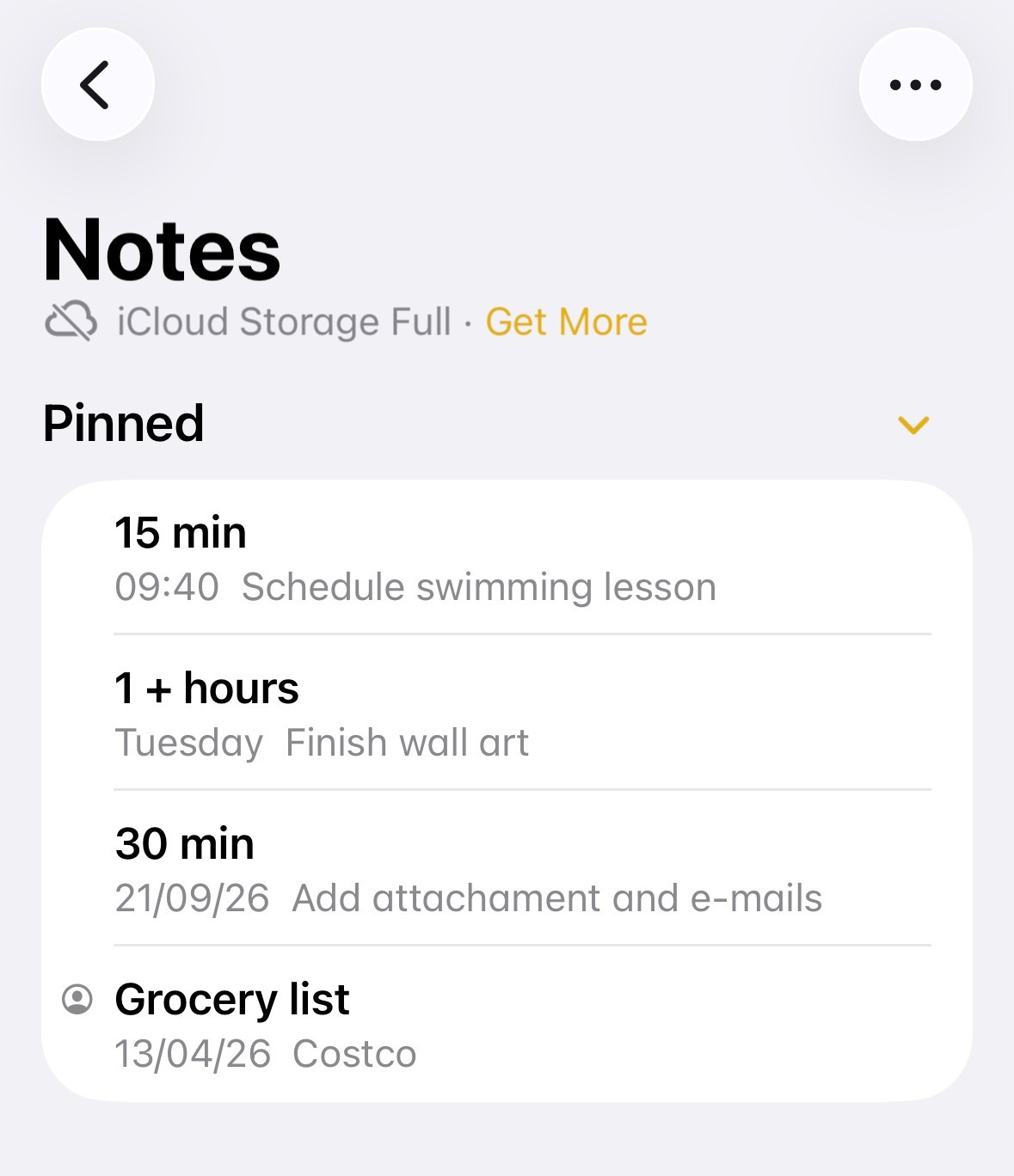
Step one: create three to-do lists
One for 15-minute tasks, one for 30-minute tasks, and one for tasks that need an hour or longer.
My 15-minute list has work things like “send follow-up email,” but also life things like “make a dentist appointment for Kid A.”
My 30-minute list has things like “put away summer clothes,” “wash coats,” and work tasks like “download bank statements.”
You get the idea for the 1+ hour list.
Step two: the nurse handoff
Now, when you choose something from a list and get interrupted (and interrupted you will be), you use the nurse handoff.
There’s a huge amount of time lost when we have to stop and start a million times. You finally sit back down, only to spend the first few minutes thinking, Wait… what was I doing?
Nurses use handoffs to quickly and accurately bring the next shift up to speed. As we sometimes have nurse duties ourselves, nothing is more fitting than borrowing the strategy.
Whenever you have to stop working, write down two things:
What was I doing?
What is the very next step?
When you come back, you don’t have to reconstruct your entire thought process. You know exactly where you stopped and exactly what to do next.
Mothering and working require their own special set of tools and skills. Figuring out what those tools are has become my fourth baby.
I hope this one helps.
A version of this post first appeared on Motheredit, my Substack. Subscribe there to get new posts by email.